Written by Eko Handayani, S. Pd
Dear readers, in today’s fast-paced academic environment, students are under more pressure than ever. Between deadlines, expectations, and the constant comparison fuelled by social media, many students find themselves mentally and emotionally drained. This condition is often referred to as Academic Burnout, and it’s becoming increasingly common. But the problem is, many students don’t even realize they’re experiencing it.
What Is Academic Burnout?
Academic burnout is a state of chronic physical and emotional exhaustion caused by prolonged academic stress. It doesn’t just mean feeling tired after a long study session, but it’s deeper than that. It can affect your motivation, performance, and overall well-being. Burnout often develops gradually, making it hard to detect until it becomes overwhelming.
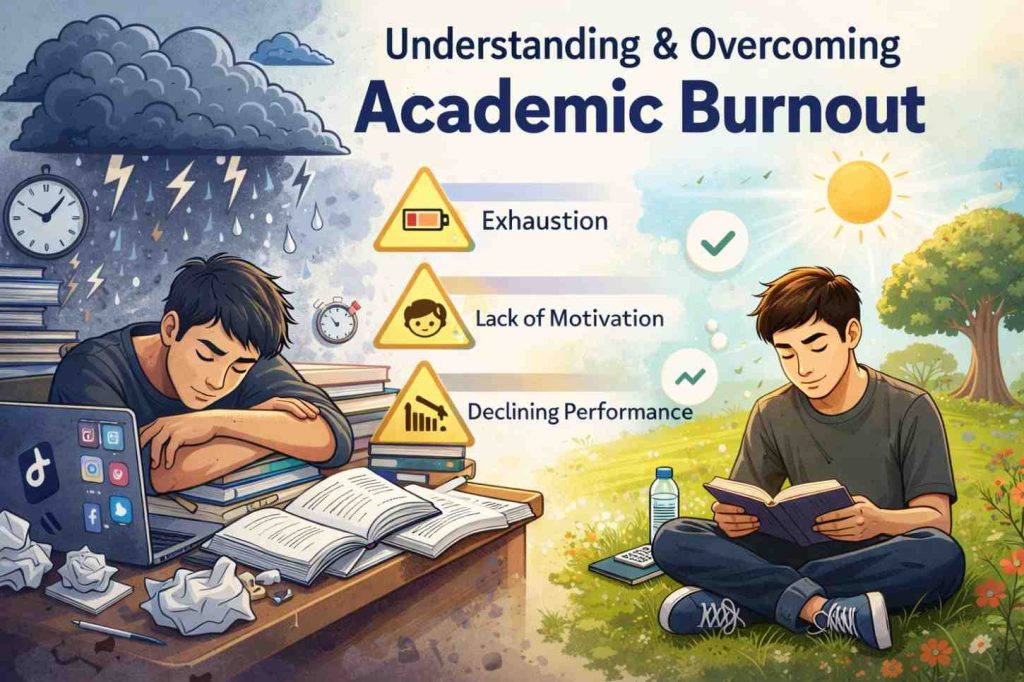
Recognizing burnout early is key to preventing it from getting worse. Then here are some common signs:
- Constant Exhaustion
You feel tired all the time, no matter how much rest you get. Even small tasks feel overwhelming.
- Lack of Motivation
Subjects you once enjoyed now feel like a burden. You struggle to start assignments or attend classes.
- Declining Performance
Your grades may drop, or you may find it harder to concentrate and retain information.
- Detachment or Numbness
You feel disconnected—from your studies, your goals, or even your own emotions.
- Increased Stress or Anxiety
Burnout often overlaps with conditions like anxiety disorders, making it harder to relax or feel at ease.
Knowing those signs, many students wonder about the causes of Academic Burnout. Burnout doesn’t happen overnight. It usually builds up due to several factors, such as (1) Unrealistic expectations (from yourself or others), (2) Poor time management and lack of rest, (3) Fear of failure or perfectionism, (4) Constant distractions, especially from apps like TikTok and Instagram, and (5) Lack of balance between study and personal life.
Related to the causes of Academic Burnout, students also need to know how to recover from it. Burnout is reversible. Recovery takes time, but small, intentional changes can make a big difference. Here are some actions that can be done to overcome this problem:
- Take a Step Back (Without Guilt)
Rest is not laziness, but it’s necessary. Give yourself permission to pause, even if it feels uncomfortable at first.
- Set Realistic Goals
You need to break your workload into simplified, manageable tasks. Focus on progress, not perfection.
- Rebuild a Healthy Routine
You can do it by sleeping consistently, eating properly, and doing little physical activity (even a short walk helps). Your body and mind are connected; taking care of one supports the other.
- Limit Digital Distractions
Remember, constant scrolling can drain your mental energy without you realizing it. Try setting boundaries with apps like TikTok or Instagram during study time.
- Talk to Someone
You don’t have to go through this alone. Talk to a friend, family member, or counsellor. Sometimes, simply expressing what you feel can lift a huge weight.
- Reconnect with Your “Why”
Why did you start your studies in the first place? Reconnecting with your goals can help restore motivation and direction.
Dear readers,
Academic burnout is not a sign of weakness but it’s a sign that something needs to be changed. In a culture that constantly pushes productivity and achievement, it’s easy to forget that your well-being matters just as much as your success. Remember to take burnout seriously, recognize it early and give yourself the care and patience you deserve. Have a nice day.
Sources: